From Big Data to Personalized Medicine : The Role of Artificial Intelligence in TCM
Chih-Hung Chang
Country : USA
Official Title : 教授
Department :
Institute : Washington University School of Medicine, St. Louis, USA
Speaker CVAI in Healthcare: Bridging Ancient Wisdom and Modern Technology in Traditional Chinese Medicine
Big data and artificial intelligence (AI) are transforming Traditional Chinese Medicine (TCM), offering powerful tools to enhance screening and diagnosis, body constitution profiling, personalized care, and practitioner development. This transformation is unfolding across four key areas: First, diagnostic objectivity is advancing through technologies such as computer vision, biosensors, and wearable devices. These tools extract measurable features from traditional signs—like tongue color, pulse waveform, and facial complexion—and convert them into digital biomarkers using deep learning models and image processing techniques. This promotes diagnostic consistency, standardization, and improved clinical training. Second, AI-driven pattern discovery uses machine learning (ML) methods, including unsupervised clustering, association rule mining, and natural language processing (NLP). Large Language Models (LLMs) support interpretation of classical texts, clinical notes, and case records, revealing semantic patterns among syndrome types, body constitution classifications, and treatment outcomes. These insights inform more precise herbal prescriptions, lifestyle interventions, and personalized care plans. Third, individualized predictive modeling integrates constitution-based assessments with multimodal data—such as genomics, behavioral factors, and environmental exposures—using predictive ML algorithms to forecast disease risk and long-term health outcomes. This enables early, constitution-guided prevention consistent with TCM’s principle of “treating before illness manifests.” Fourth, dynamic assessment of TCM practitioner competencies is powered by Item Response Theory (IRT), Computerized Adaptive Testing (CAT), and conversational AI chatbots. These systems evaluate diagnostic decision-making and provide adaptive feedback and precision education, while AI chatbots serve as intelligent tutors—offering real-time guidance, answering clinical questions, and supporting lifelong learning. Together, these innovations bridge classical theory with modern computation, empowering TCM to evolve as a data-driven, adaptive, and globally relevant system of personalized medicine—enhanced by interactive, AI-powered tools for both practitioners and patients.
The Application of Big Data and Artificial Intelligence in Integrative Care Combining Western and Traditional Chinese Medicine
Big data and artificial intelligence (AI) have emerged as significant trends in integrative Chinese and Western medical care research in recent years. This study aims to explore how the analysis of large-scale medical databases combined with large language models (LLMs) can promote precision and personalized integrative care. By analyzing national health insurance databases and hospital clinical research databases with machine learning techniques, differences in efficacy and safety between traditional Chinese medicine (TCM) and Western medical treatments can be identified, leading to the development of integrative care models. Furthermore, this study applies LLMs for medical record text mining, automated data compilation, and patient education regarding care, providing evidence-based decision support for integrative medical practices. Leveraging the natural language processing capabilities of LLMs effectively integrates patients’ medical records, enhances the efficiency and accuracy of clinical decision-making, and increases patient engagement in care plans. Future efforts should expand database scales and enhance the generalization capabilities of AI models to achieve comprehensive, precision integrative care.
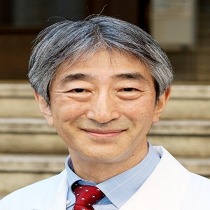
Kenji Watanabe
Country : Japan
Official Title : 教授
Department :
Institute : Yokohama University of Pharmacy
Speaker CVPrediction Model of Kampo pattern diagnosis
In 2022, the World Health Organization (WHO) launched the 11th revision of the International Classification of Diseases (ICD-11), marking its first update in 32 years since the release of ICD-10 in 1990. The ICD system, with a history dating back to 1900, has traditionally undergone revisions approximately every decade. ICD-11 represents a major advancement designed for the digital age, with 35 countries beginning digital implementation upon its release—departing from prior reliance on printed formats. Among the notable innovations in ICD-11 is the inclusion of a new chapter dedicated to traditional medicine—an unprecedented development in the more than 120-year history of ICD. This chapter comprises two components: traditional medicine disorders (163 entities) and traditional medicine patterns (209 entities). To contribute to the scientific validation of traditional medicine patterns, Keio University School of Medicine has developed a digital platform capable of aggregating real-world data. This system incorporates patient-reported outcomes (PROs) using visual analogue scales (VAS) for symptom evaluation, alongside physician-entered diagnostic findings, ICD diagnoses, Kampo patterns, and prescribed formulas. The accumulated data have led to the publication of 16 peer-reviewed English-language papers. This presentation will explore insights gained from real-world data and discuss key challenges ahead in advancing the scientific understanding of traditional medicine patterns.
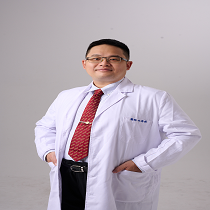
From Data to Diagnosis: The Role of TCM Physicians in AI-Driven Medical Research
As artificial intelligence (AI) continues to progress, the active involvement of traditional Chinese medicine (TCM) practitioners in AI-based medical research is essential for advancing the scientific development of TCM. This talk explores how clinical TCM physicians can effectively collaborate with AI researchers in multiple phases of research, including patient recruitment, clinical data collection, annotation of TCM-specific features, algorithm design, and manuscript writing. In a project focused on acupuncture safety, TCM clinicians collected and annotated real-world needling images, facilitating the training of a deep learning model capable of detecting needle breakage and retention. This model helps improve patient safety by offering real-time monitoring of acupuncture procedures. In another set of studies targeting early dementia screening, TCM doctors were responsible for community subject enrollment, pulse waveform measurement, and the interpretation of harmonic pulse indices relevant to cognitive function. Machine learning models developed from these datasets successfully distinguished between individuals with Alzheimer’s disease and healthy controls, demonstrating the potential of combining pulse diagnostics with AI to create noninvasive, efficient, and accessible screening tools. These interdisciplinary collaborations illustrate that TCM practitioners are not merely data contributors but active co-investigators who provide clinical insights and guide the selection of meaningful features grounded in traditional diagnostics. Through such partnerships, the empirical wisdom of TCM can be translated into measurable, evidence-based knowledge. This integrative approach not only strengthens the clinical value of AI models but also opens new directions for digitizing and modernizing traditional medicine in a way that maintains its holistic perspective while aligning with contemporary scientific standards.
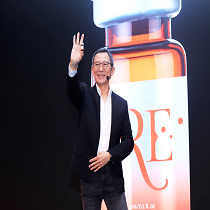
Applications of AI and Exosome Technology in the Clinical Practice and Research of Traditional Chinese Medicine
Artificial intelligence (AI) is profoundly reshaping the biopharmaceutical industry, leading innovation in new drug research and development. Within this trend, exosomes, with their immunomodulatory, anti-inflammatory, and tissue regenerative capabilities, have become a key platform for regenerative medicine due to their precise intercellular signaling, opening new opportunities for the treatment of multi-system diseases. Current clinical applications focus on reproductive medicine (such as ovarian function regulation, endometrial regeneration, and intimate mucosal repair), and are expanding into areas such as orthopedic degeneration (such as osteoarthritis) and skin regeneration (such as deep wound healing). AI applications have achieved substantial breakthroughs. For example, the first AI-designed drug from Google DeepMind's Isomorphic Labs has entered human trials, marking a significant advancement in AI's molecular mechanism exploration. In response to this development, Bionet Group has been continuously innovating in technology since 2008 and launched the "AI Foundry" and "Exosome R&D Outsourcing" projects in 2024. Combined with NRICM (Taiwan Chingguan Yihau), they are validating the dual-action "AI × Exosome" technology, which can precisely regulate molecular pathways and significantly enhance the efficacy of combined therapies. The Group is further leveraging the unique exosome delivery system to expand into regenerative medicine and medical aesthetics applications, including skin, hair follicle regeneration, and bone rehabilitation. Through deep AI integration, it is accelerating drug development, medical aesthetics manufacturing, and Chinese herbal medicine research, driving the industry towards a new stage of efficiency and precision.
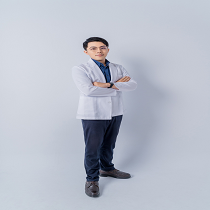
Integrating Traditional Chinese Medicine and AI: Applied Research Perspectives
This presentation explores innovative research and practical applications of integrating artificial intelligence (AI) with Traditional Chinese Medicine (TCM). It begins by defining AI and highlighting the recent wave of AI technologies centered around large language models (LLMs). Subsequently, the presentation discusses significant applications of LLMs in TCM, including their use in evaluating and analyzing the national TCM licensing examination questions, and translating and systematizing classical medical texts. Several specific clinical and research applications will be demonstrated. In diagnostics, AI-assisted tongue diagnosis interpretation and automatic case generation from clinical consultations are highlighted. Clinical reasoning applications include AI-supported syndrome differentiation analysis, diagnostic training, and automated visualization of disease pathogenesis models. Additionally, the presentation will illustrate how AI aids the modernization of ancient medical literature through translation, graphical representation of textual content, and facilitating the reading and summarization of medical research articles. Finally, the presentation reviews practical examples of current AI adoption within the medical field and discusses future trends and prospects for the integration and development of AI with Traditional Chinese Medicine.
top